

My last post was a story about a motorcycle trip that was drenched (pun intended) in adversity, cumulating with my voltage regulator frying for the second time. I think the “magic box” nickname comes from the fact that when it fails, nothing works, and when it’s replaced, everything works again. Magic.
The Magic Box

“What if I run out of gas? What if I get a flat tire? What if I break down? What if it rains? What if we get beat up by bikers?”
This is another magic box tale, as told by a lifelong friend. When we met in 1989 at the Easyriders Rodeo in Chillicothe Ohio, he reminded me of the biker in the famous Ghostrider painting by David Mann, right down to his motorcycle.
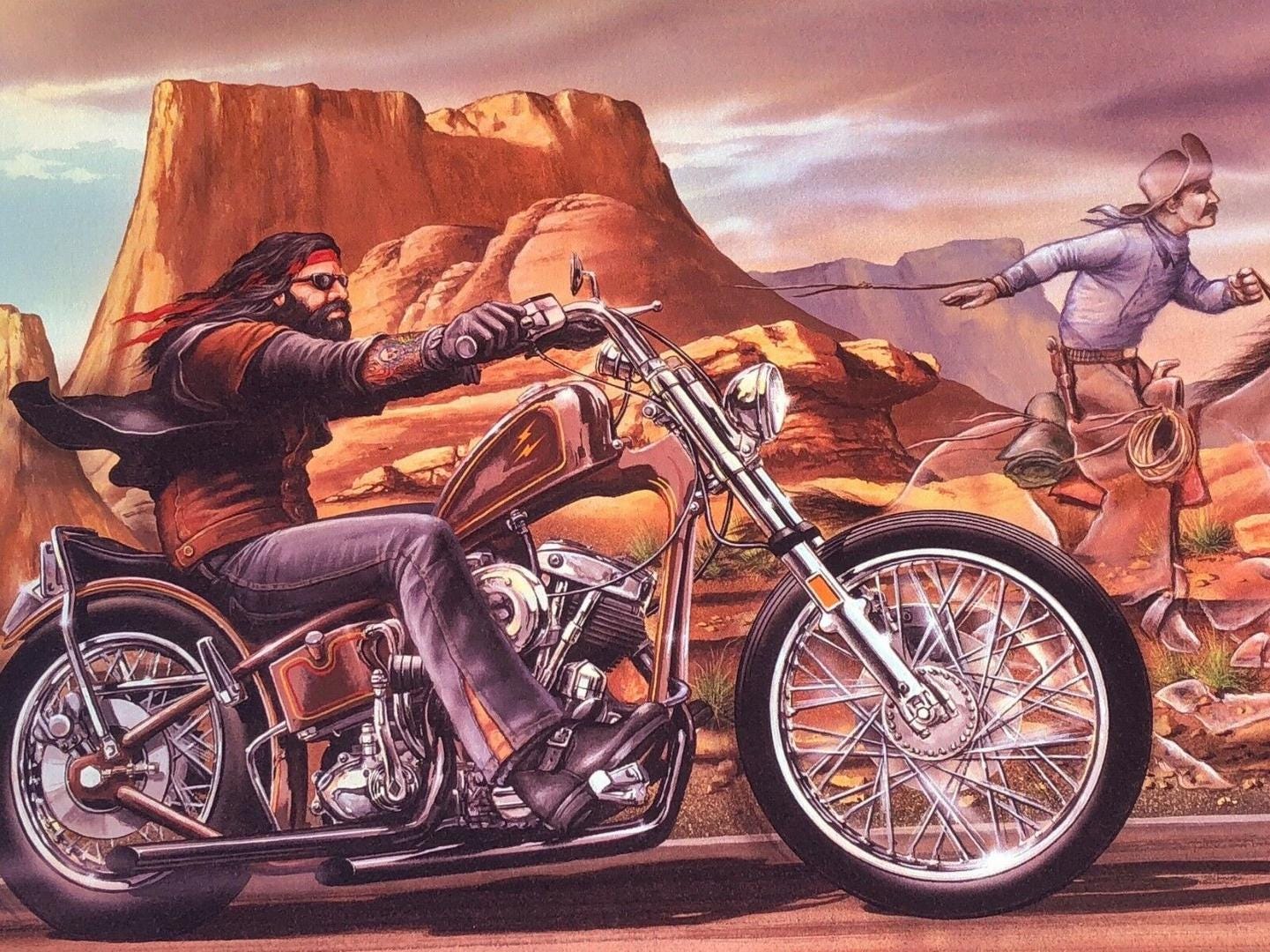
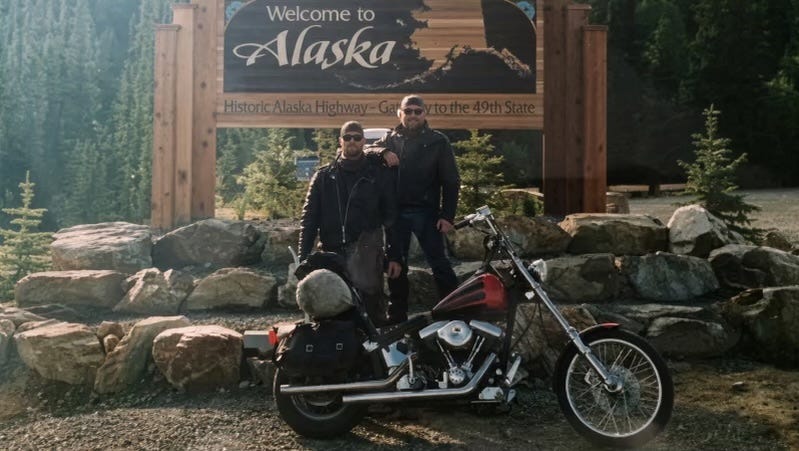
We were from the same city, but had never met until the Chillocothe rodeo, four hours from home. I’ll just call him Alaska, because he talked a lot about his plan to ride 4,000 miles to that northern state that is separated from the lower 48 by Canada.
The Tow Rope Story
Before he tells the magic box story, it’s always prefaced by the story of why he carries a tow rope on long trips. We rode to Sturgis in a group for the 50th anniversary in 1990, but Alaska kept going after the rally, all the way to California then back across the southern states, meeting up with us on Labor Day weekend in Chillicothe for another Easyriders rodeo.
While travelling through Arizona the extreme heat snapped the primary belt on his custom-built chopper. Most Harleys have a primary chain from the motor to the transmission, inside a case swimming with fluid. Primary belts don’t turn inside fluid so they don’t need to be encased, although it’s a good idea, for safety.
With spinning machinery that close to your shifting foot, a frayed pant leg or stray shoe lace could rip your foot off.
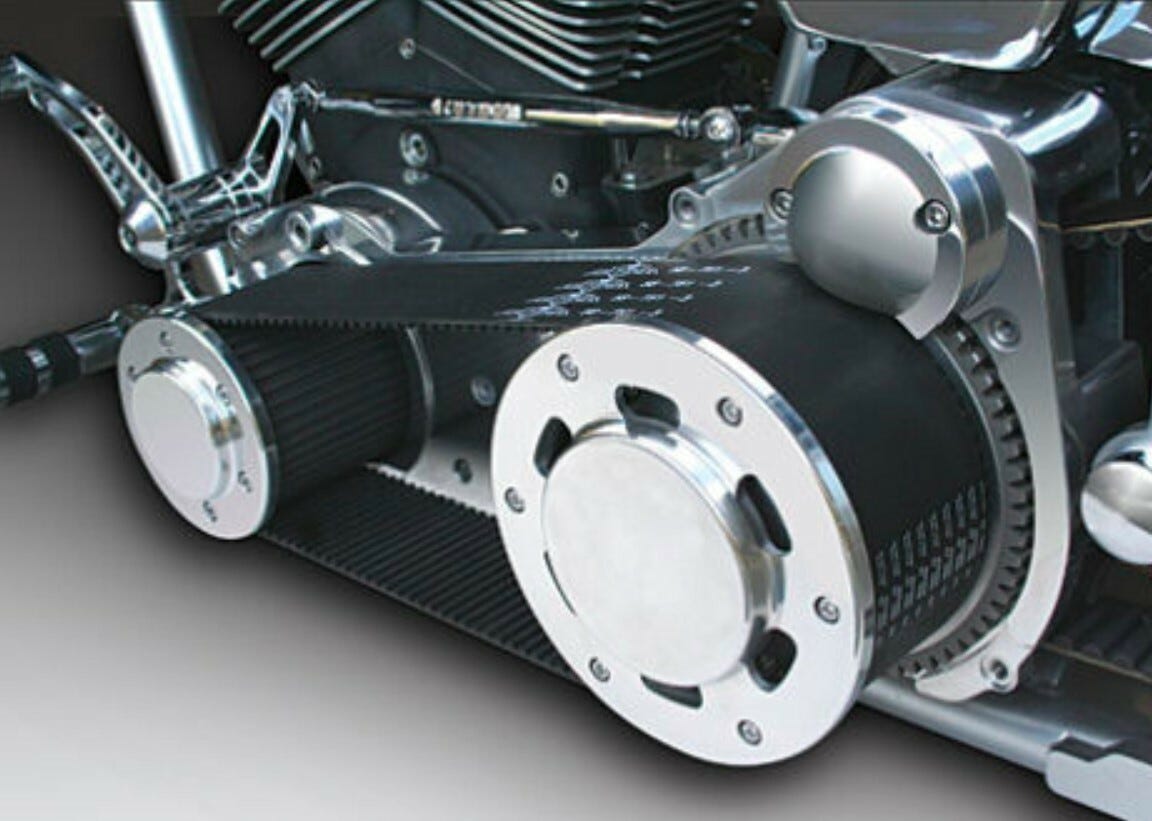
The case should be ventilated though, to prevent turning it into an oven and melting the rubber belt when you’re riding across Arizona in the summer and it’s 110 degrees. This was news to Alaska, being from a region where the riding season is often interrupted by three months of snow. I’ll let him take over:
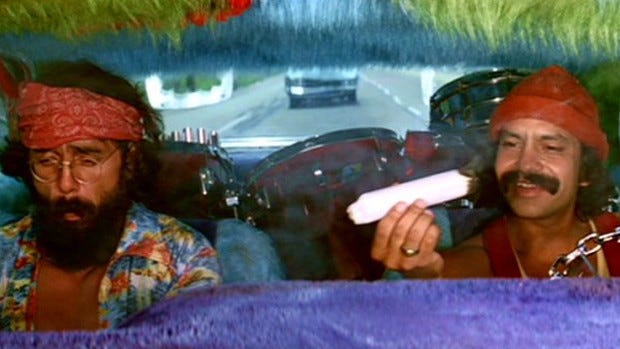
“So I’m on the side of the road. And there’s a guy that looks like Chong from Cheech & Chong, pulls up in a Volkswagon Beetle, with bathtub flower stickers on the side of it. And he was a flower child and he was probably high when I was talking to him.
He said ‘Hey man, are you broke down?’
And I said, ‘Yeah, can you tow me to the bike shop?’
And he said, ‘Yeah, I know a guy that works at the bike shop.’”
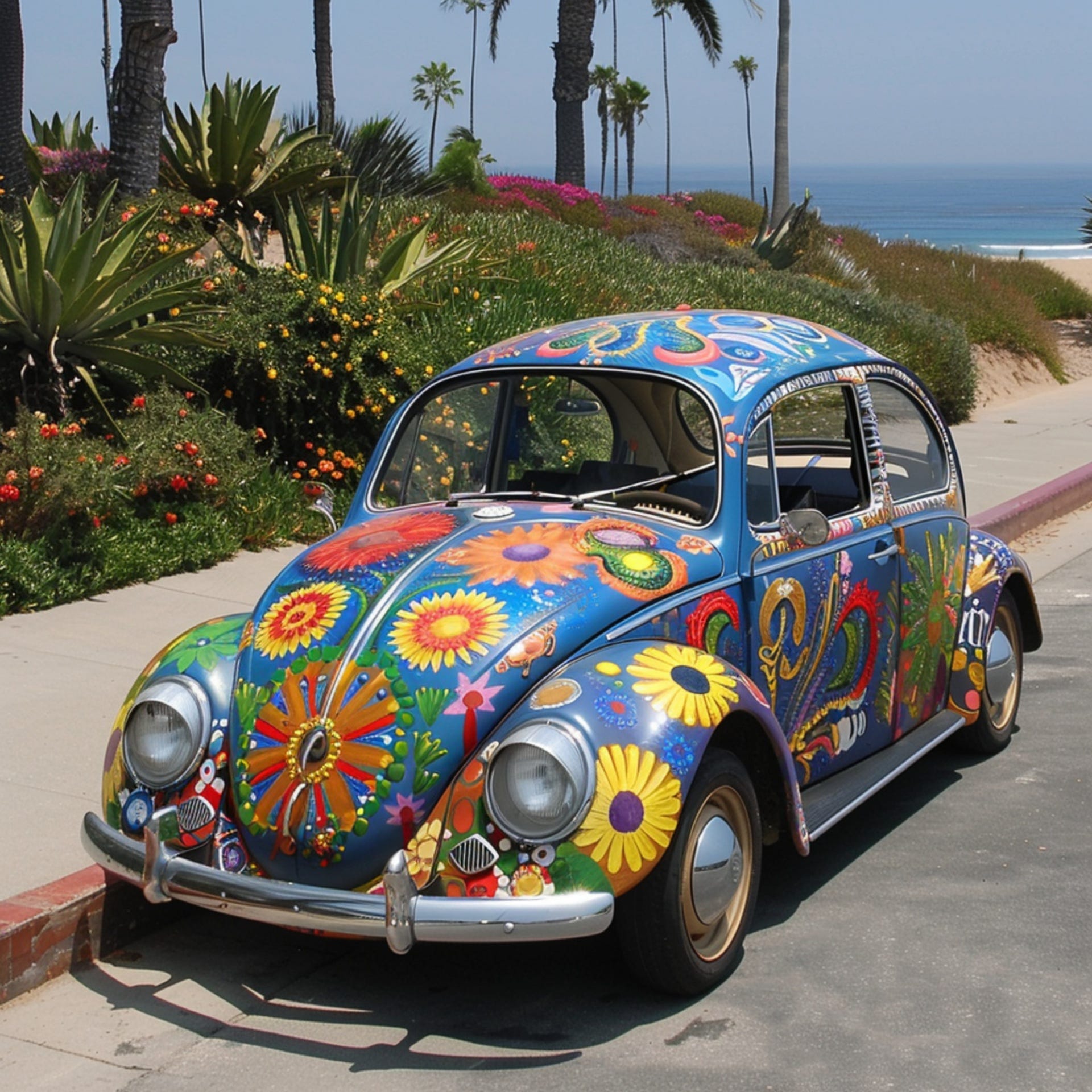
They tied a rope to the back of the Beetle. Alaska held the rope in his left hand and steered with his right. The driver was taking it easy and being really careful and they went about six miles. They pulled up to a main road that they needed to cross.
“He pulls across then stops to make sure I’m okay. The rope is pulled tight across the road and here comes a motorcycle cop. And I’m screaming ‘Go, go, go.’
And he’s like ‘What? What?’
The cop didn’t have to slam on the brakes or anything. But he had to come to a pretty quick stop to avoid getting clotheslined. He was so pissed off. He screamed ‘What the fuck are you guys doing?”
Alaska explained that he was from way up north, his primary belt was broken, and he was just trying to get to the bike shop to get it fixed. The cop asked Tommy Chong for his title and insurance. When he opened the glove box some drug paraphernalia for smoking marijuana fell out.
Alaska thought they were done, but he pleaded his case and begged for sympathy. The cop finally let them go, perhaps seeing the humor in the entire fiasco. Alaska made it to the bike shop, had a new belt installed, got a lesson in primary case ventilation, and showed up in Chillicothe with the primary case inspection cover tucked away in his saddlebag and another crazy story to add to his résumé. Seven years later he was packed for the 4,000-mile Alaska adventure with another rider he had met recently who insisted on making the trip with him.
Alaska Bound
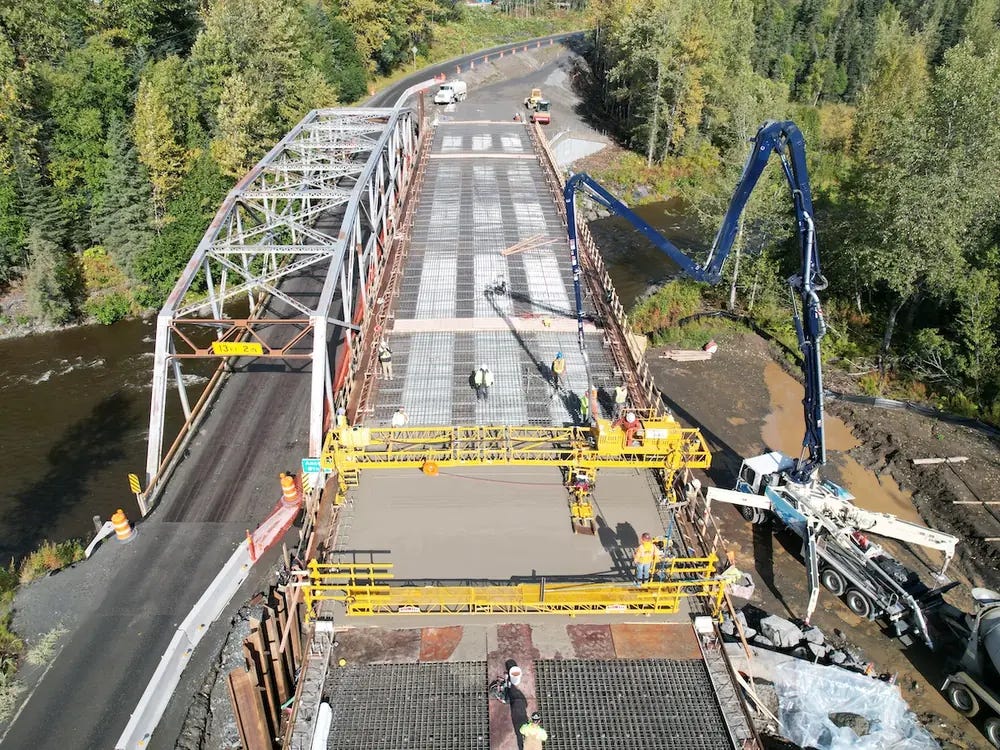
The Alaska highway was constructed during Word War II to connect the United States to Alaska through Canada. It runs across the top of British Columbia and cuts across the Yukon. There’s not much up there. On a motorcycle it’s wise to fill up the tank every time you see a gas station if you don’t want run out of gas. When Alaska rode to his namesake there were about five wire mesh deck bridges to cross - purposely constructed so the snow falls through in the winter. He describes the experience:
“With a 21-inch front wheel, an 8-over front end, and a fully packed bike, you have to accelerate the whole time to stay upright. By the time you get to the end you’re hauling ass and white knuckling it.”
The last one was the longest, causing him to seriously consider turning around and throwing in the towel. But he made it.
“Middle Of Nowhere”
One day they’re somewhere between Anchorage and Fairbanks, “far from civilization” and Alaska’s chopper quits. Out comes the tow rope. This time the rope is tied to his riding buddy’s Harley instead of the back bumper of a 1960s hippy-mobile. He towed him to the next gas station about 20 minutes down the road. Out come the tools and off comes the seat. After a few minutes of wire tracing and testing he determines that his magic box is indeed toast.
He sat there stranded, dooming and glooming and contemplating his next move. Suddenly a van with an enclosed trailer pulls in, followed by a pickup truck towing a flatbed trailer with three Harley Davidson motorcycles - two side by side and then one behind them on the left.
Alaska sees that setup and quickly walks over, thinking his bike will fit on the right side of the rear bike. His excitement turned to disappointment as the bike had a sidecar, which took up the rest of the space in the trailer.
The stranded bikers strike up a conversation with the travelers. Alaska talks about his dream trip he’d been planning for years and how he’s broken down. One of the drivers tells his story. He just retired from the military after 20 years in Alaska. He packed up everything he owned, including his new Harley Davidson motorcycles, and was moving to Idaho.
“What’s wrong with your bike?” the stranger asks.
“My magic box is fried,” replies Alaska.
“Start taking it apart,” he says.
The retired soldier opens the enclosed trailer and starts pulling everything out while Alaska starts disconnecting the magic box. Apparently, the traveler had replaced the stock parts on the new Harleys with Screaming Eagle accessories to enhance performance. The bike parts were the first to go into the trailer so everything had to come out to reach them.
He comes out of the trailer holding a brand new magic box in his hand.
“Try this,” he says, handing the voltage regulator to Alaska. “You look nervous. I’m going to go and grab us some beer.”
Alaska was nervous.
What are the odds of someone pulling in here, exactly when I need them to, and having the spare part I need, that’s practically brand new, and then taking the time to unload an entire trailer, then reload it again after retrieving the part? he thought to himself. He has a brand new Harley and I have a custom-built chopper. So what are the odds this part actually works?
The friendly stranger returned from the gas station store with a 12-pack of beer and began passing it around to Alaska and his riding buddy, and to his son who was driving the van and moving with him. They talked some more and drank a couple of beers while Alaska hooked up the new magic box.
“I thinks it’s ready,” said Alaska.
“Well, what are you waiting for?” asked the stranger.
Alaska nervously pushed the start button and his motorcycle roared to life. He revved it a couple of times then let it idle. The ratta-tat-tat of his V-Twin motor never sounded so good. Alaska breathed a huge sigh of relief.
“I don’t know what you were so worried about,” laughed the stranger. “I wasn’t.”
The guy reached out to shake Alaska’s hand and Alaska opened his arms wide and gave him a hug instead.
“Thank you so much,” said Alaska. “How much do I owe you?”
“Nothing,” said the stranger.
“What do you mean nothing?” said Alaska. “You saved my ass. I have to pay you at least the price of a new magic box.”
“Okay,” said the stranger, “I’ll tell you what. I would really like a T-Shirt from the Harley Davidson dealership in your hometown. When you get home, send me one.”
Alaska got his name, address, and T-shirt size then thanked him five more times. He made the 4,000-mile trip home without issue. Alaska was determined to pay the kindness forward by stopping to help stranded motorists, especially stranded motorcyclists. He continues that habit to this day. He describes the experience and what he did when he got home:
“I still, to this day, can’t believe that happened and I was there. It almost sounds like a made-up story. The minute I got home I went straight to the dealership and bought the most expensive T-shirt they had. I mailed it to the guy priority mail that day. And I wrote him a nice letter thanking him again and letting him know that we made it home safely.
Coming Soon
Whenever you (includes me) start thinking you’re some kind of badass long distance rider, you always meet someone else who humbles you without even trying. When I share my stories about riding 1,200 miles to Sturgis every year with no windshield, rain or shine, I’m not trying to flex. I’m just telling you how I do it, and some of the things that have happened along the way.
Look at the picture above in front of the Alaska sign - a custom chopper with small leather saddlebags. They road at least 9,000 miles in total, sometimes through remote wilderness and rough roads - without GPS or cell phones.
Then there’s Jimmy and Junie. They completed the Hoka Hey Motorcycle Challenge several times. It’s approximately 10,000 miles that must be completed in 14 days. Some do it in 10. That’s some serious riding. The rules prohibit the use of GPS, extra fuel containers, and sleeping in motels.
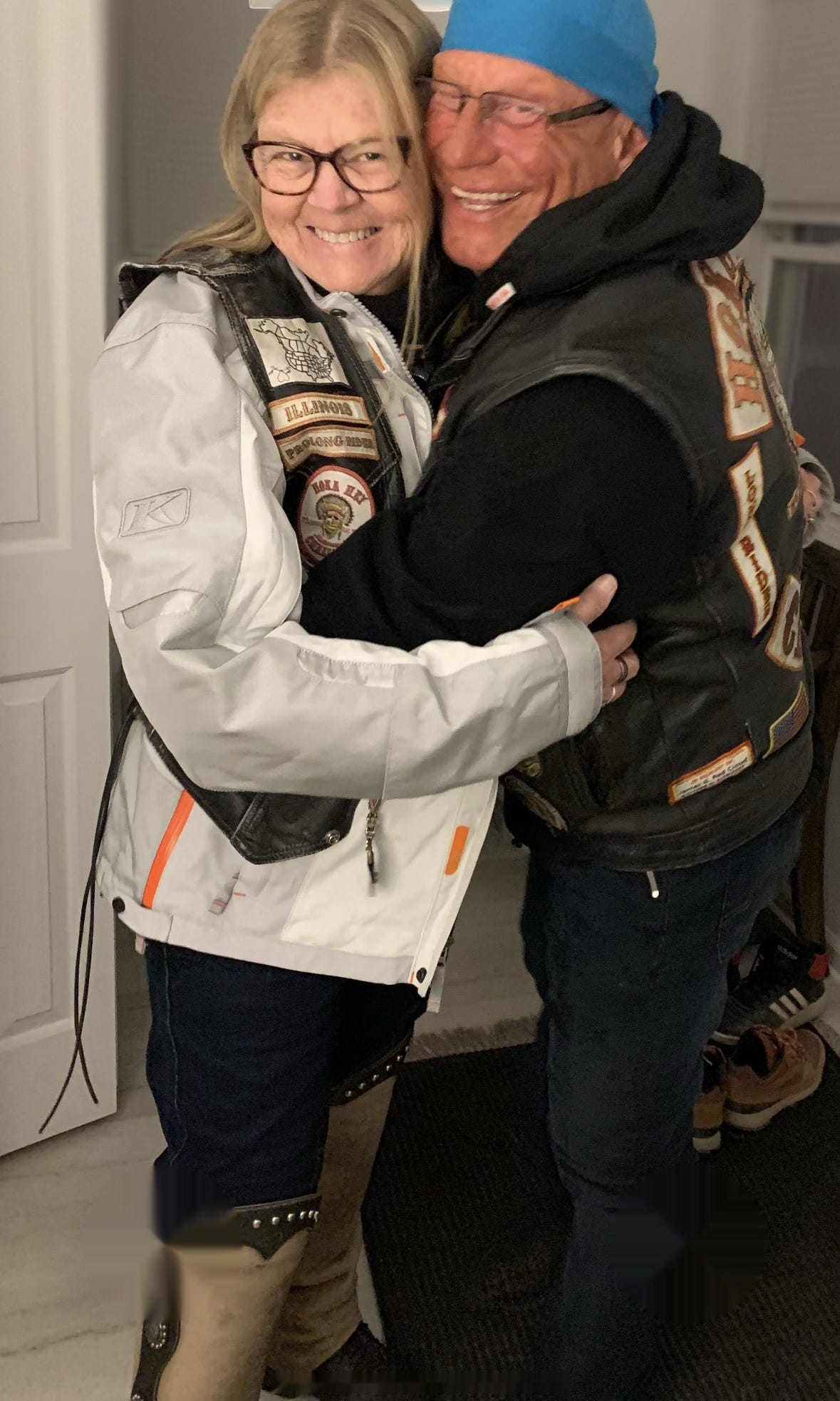
Nobody knows where they’re going ahead of time. They hand you an 8.5" x 11" laminated sheet of paper with turn by turn directions. The first Hoka Hey challenge went from Key West, Florida to Homer Alaska in 2016. I recently had the pleasure of interviewing this couple. Please subscribe so you don’t miss it.