

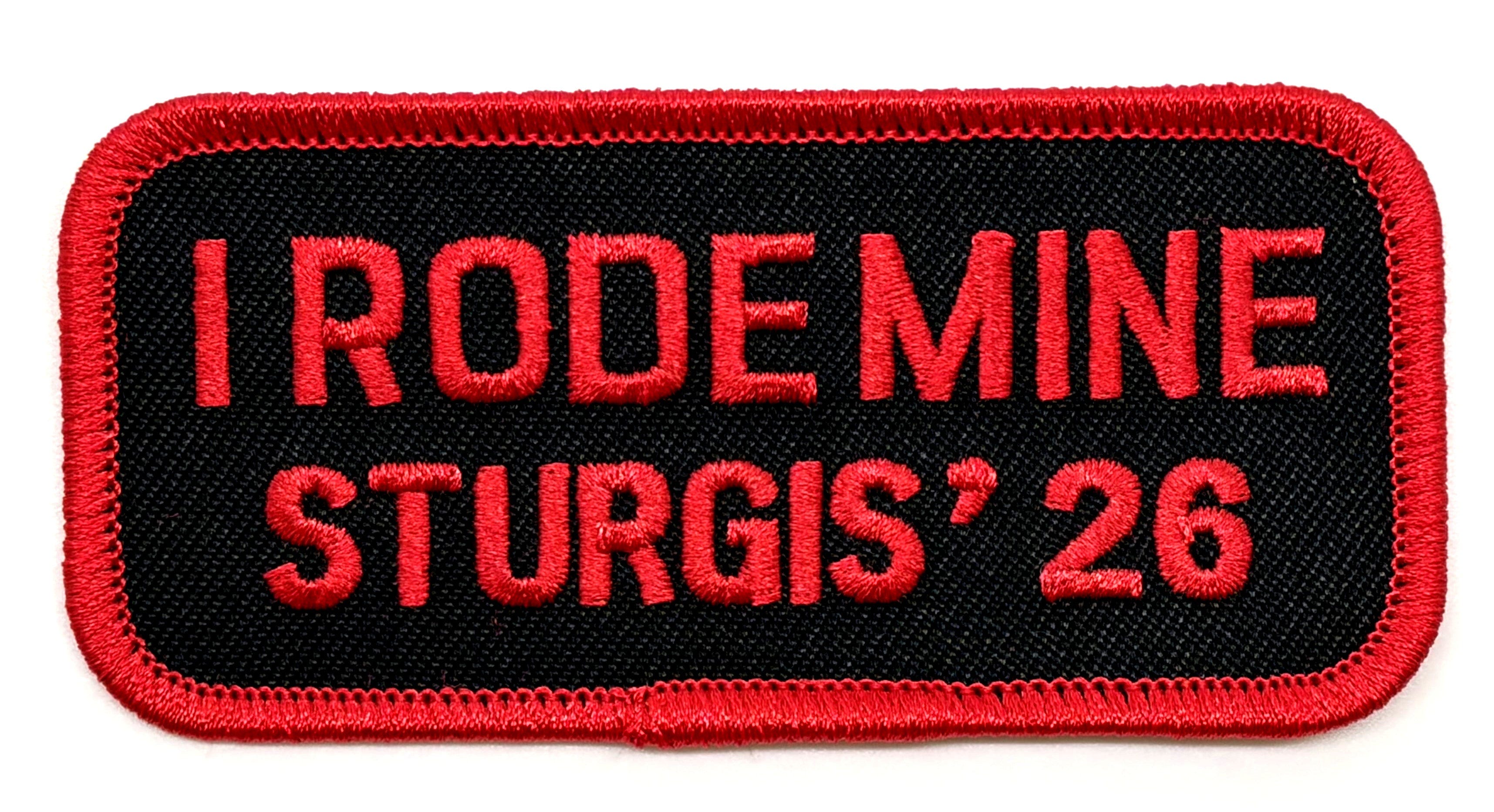
I first heard about the challenge from a guy I met in Sturgis while we were decrying the fact that so many people trailer their bikes to the rally. You’ll never see me with an “I rode mine” patch. It seems ludicrous that anyone would have to say it, but here we are.
Hello Captain Obvious.
He works for one of the vendors during the rally, changing oil and performing other maintenance and repairs on motorcycles. The tent that’s strapped to his bike is his home, as he travels the country working the big rallies like Daytona and Laconia to earn enough money for his minimalist lifestyle. He casually dropped the fact that he rode 10,000 miles in less than two weeks in Hoka Hey Motorcycle Challenge (HHMC).

How It Started
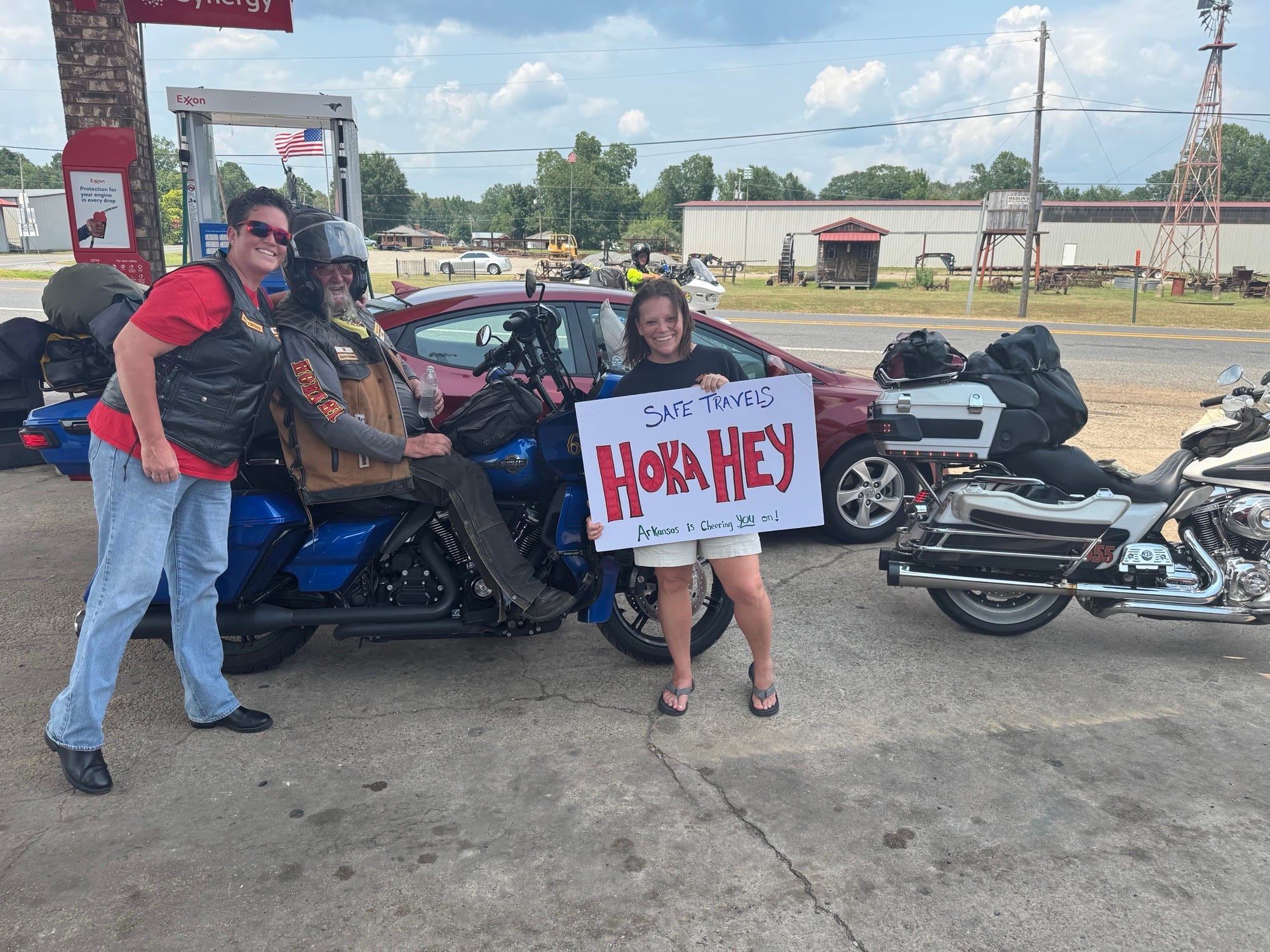
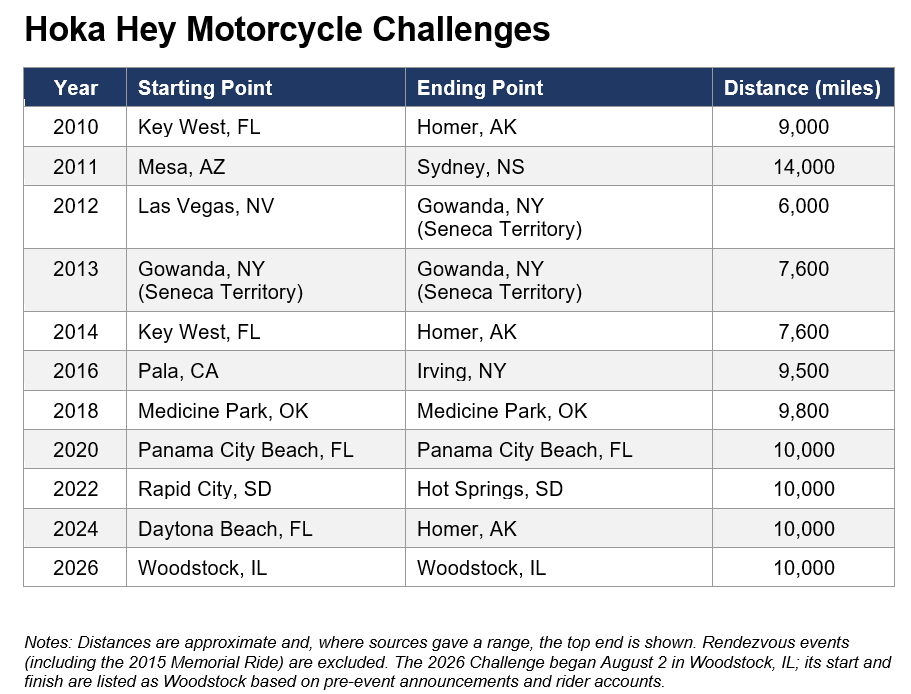
The first Challenge in 2010 was more like a race, because there was $500,000 in gold waiting for the first person to cross the finish line in Homer, Alaska, after departing from Key West, Florida. The 9,000-mile route went through 62 mountain ranges, 33 Indian reservations, 26 National Forests, 8 deserts, 6 National Parks and 4 swamps.
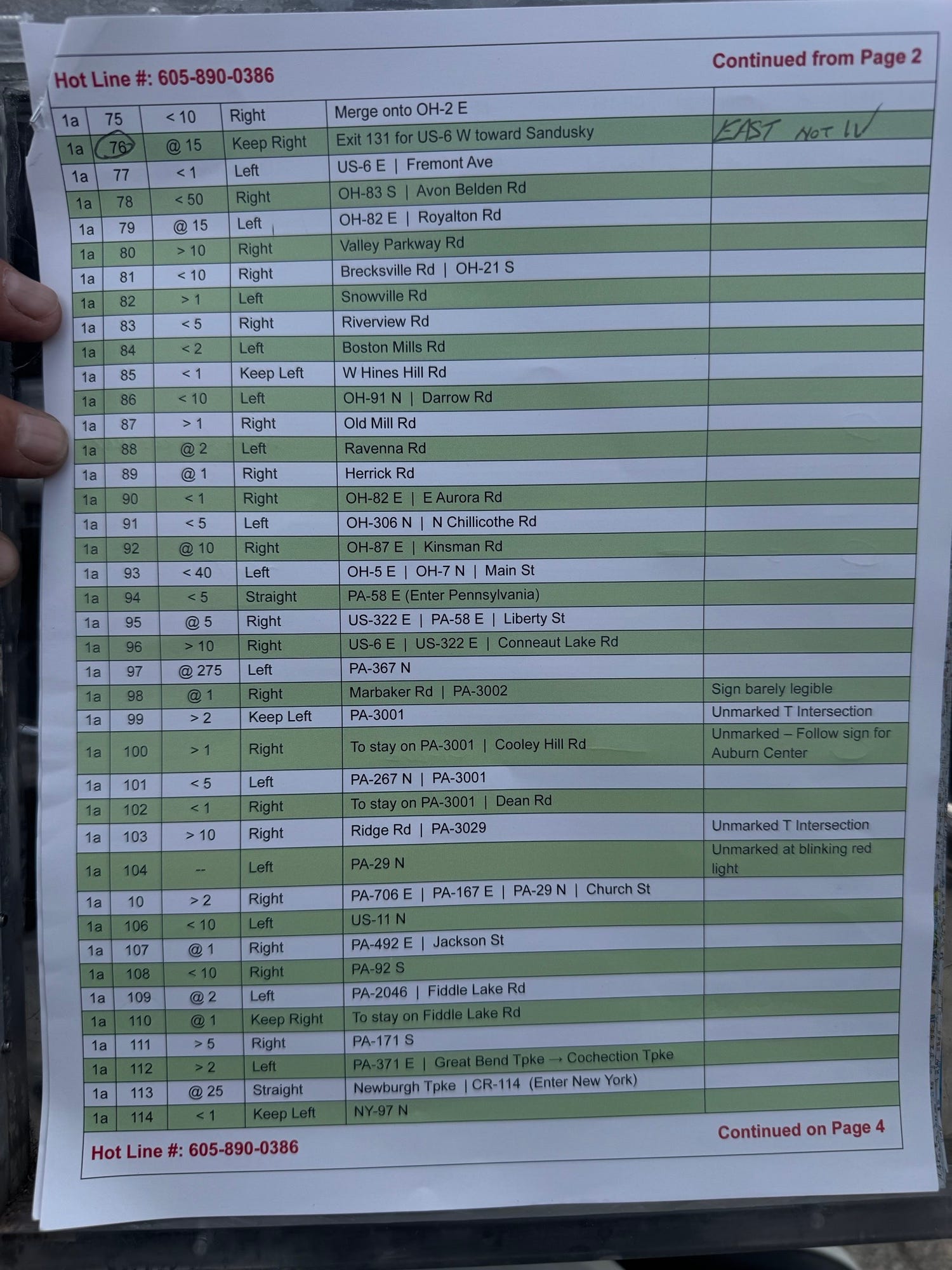
The routes are always a tightly kept secret. They give you an 8½ x 11-inch laminated sheet of paper at the beginning of the Challenge with turn-by-turn directions to the first checkpoint. The checkpoints are approximately 2,500 miles apart. They use a fleet tracker to monitor your whereabouts and make sure you stay on the course and don’t exceed the speed limit too much.
They try to keep the route off interstate highways. When you start doing the math on an average speed of 45-50 miles per hour, it doesn’t leave much time for breaks, including sleep. I recently interviewed a couple, Jimmy Milas and Junie Rose, who competed in the challenged 14 times combined (nine for Junie and five for Jimmy).
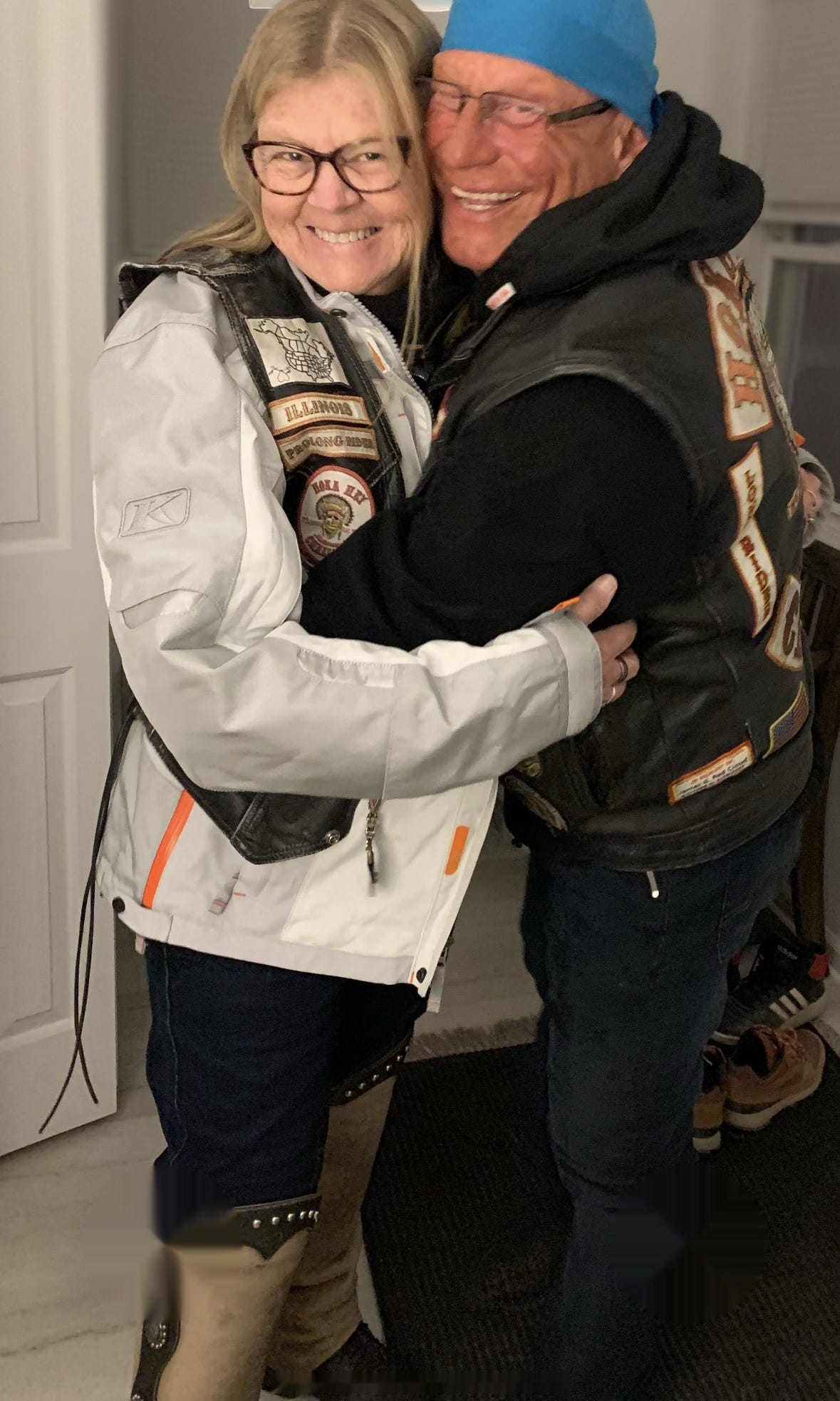
Junie entered the first challenge in 2010 and has an interesting story about her journey with some of the other riders she traveled and bonded with. You can read the story here. She is now the Director of Rider Relations for the HHMC.
Sturgis Wind: “What drew you to the Challenge the first time? What made you want to do it?”
Jimmy: “A friend of mine talked about it, and then I met a fella on a ferry, going to Newfoundland. We chatted for a bit, talked a little bit about the criteria, and that’s when I decided I wanted to do it. That was in 2015, and I rode 2016 my first time.”
Junie: “For me, it was a kind of a romance story about life and death. I was in chemo, in March of 2010 when I read about Hoka Hey. I was fighting my second round of cancer - breast cancer. And a guy sitting next to me – I told him ‘they’re going to do a motorcycle ride from Key West, Florida to Homer, Alaska, and the prize is a half a million dollars in Alaskan gold.’ And he said, ‘you should go do that.’ I said, ‘I should.’ And my young child just came into the room and said I should.
I said, ‘Hey Doc, You think I’ll be strong enough by June to ride a motorcycle to Alaska?’ And he said, ‘Go live your life. Don’t let this cancer slow you down.’ And he gave me $100. So I thought I’ve either got to do this ride or I’ve got to give this man his money back. So I told my caregiver who drove me back and forth to chemo about it, and his band had a benefit for me.
And they raised enough money for me to enter the Hoka Hey. So I went. I rode down to Florida. I had no hair. I had one breast. I was skinny as could be. But I just wanted to get to Alaska on my motorcycle, and so that’s where it all started for me, and then I just couldn’t get enough after the first one, I didn’t make it to Alaska the first time, but I did eventually make it to Alaska. For me, it was just, I didn’t need the prize money. I loved the challenge of getting out there and figuring this out. You know, the very first year, there wasn’t even a mileage. They didn’t tell you it was going to be 10 miles or 20 miles. You just had to find the roads.
So it was pretty tough. You know, there was somebody that made it up there and got the half a million dollars. And then the second year we rode 48 states and two provinces, and that was crazy. There was a hurricane that blew in that year, and every year there’s something, it seems like that’s unique to it, but the Hoka Hey was originally started by a guy named Jim Red Cloud, who was the grandson of the chief of the Lakota people, on Pine Ridge. And his vision was to bring awareness to the United States and Canada about the plight of the Lakota people, because there’s 40,000 people living on that Indian reservation, and 33% of them at the time did not even have running water.”
Sturgis Winds: “Oh, man.”
Junie: “So, for that to be right here in the United States. You know, it was something he wanted to bring awareness to. And the whole challenge idea of, here are some directions that morning, that’s the first you get to see of them. No plotting, no planning. You have no idea what to dress for, where you’re going, and off you go. It, it was exhilarating.”
Here’s a story about another rider who was drawn to Alaska:
The Magic Box Part 2

My last post was a story about a motorcycle trip that was drenched (pun intended) in adversity, cumulating with my voltage regulator frying for the second time. I think the “magic box” nickname comes from the fact that when it fails, nothing works, and when it’s replaced, everything works again. Magic.
Food, Showers, Sleeping - You’re On Your Own
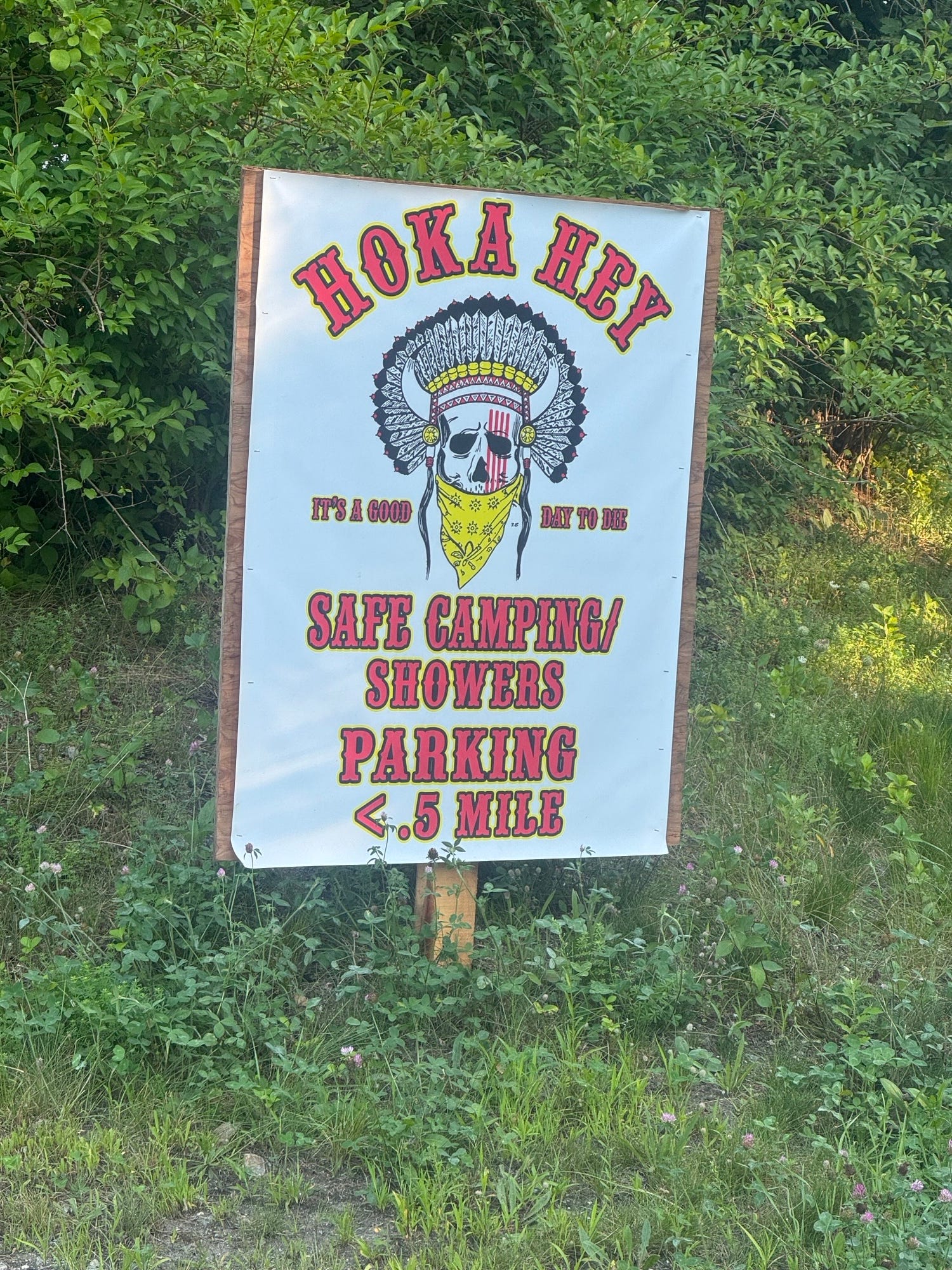
Jimmy: “Junie’s a real fan of stopping along the way if she sees a Flying J, get some laundry done, and have a shower. But myself, I keep going until I’m finished. I did get an opportunity to have a shower on the '26 Hoka Hey because the dealership in Rhode Island - they had one shower there and they opened it to all the Hoka Hey riders who wanted to shower.”
The couple only rode together once in the Challenge. Junie likes to take her time and soak in every moment, whereas Jimmy likes to get to the end as soon as possible. They’ll set up a tent to sleep in if it’s wet, or if there are mosquitos, otherwise they sleep on the ground next to their bikes.
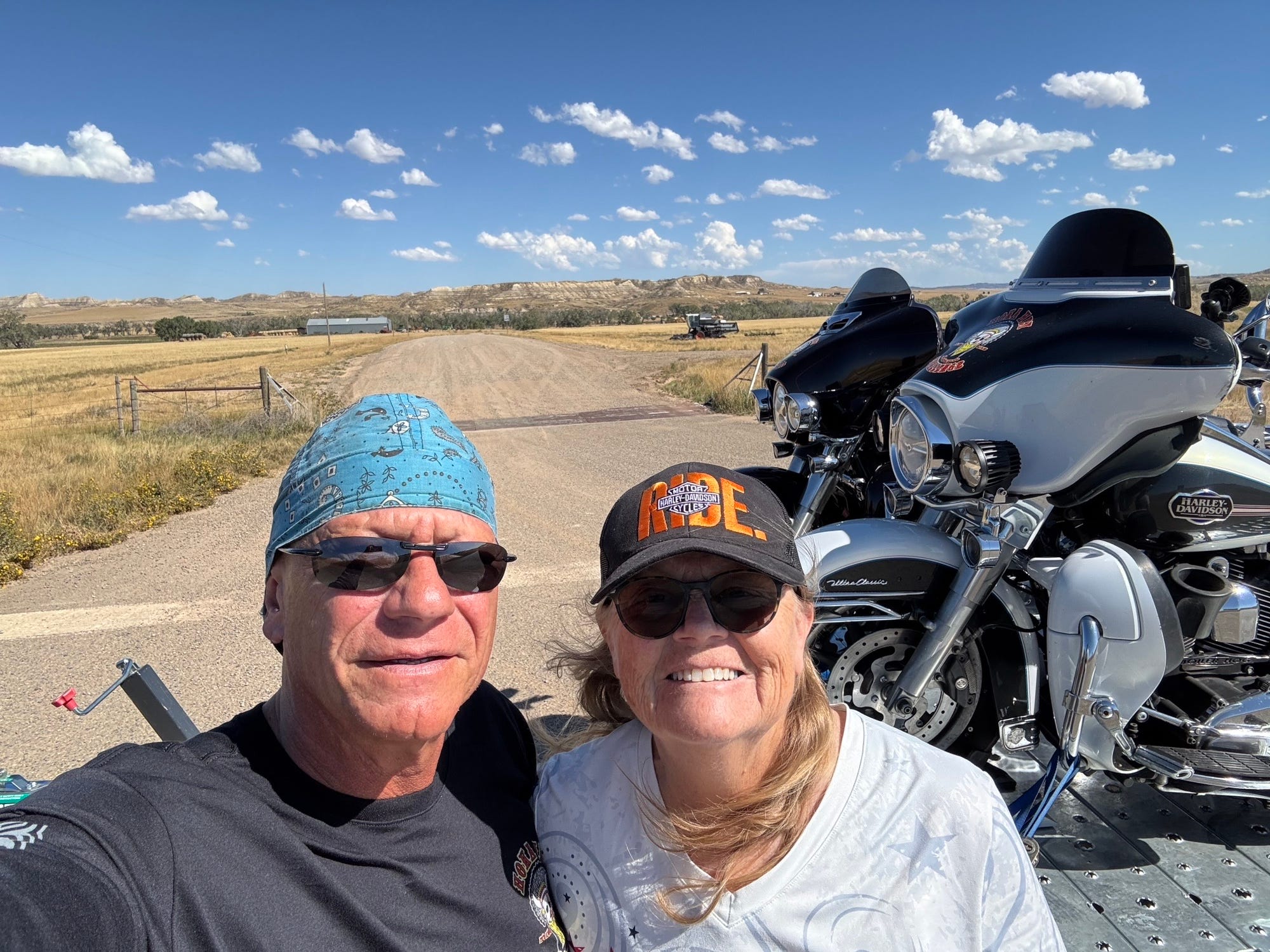
Junie: “Sometimes the weather is just beautiful, even at night, and you can just lay down beside your motorcycle and use your tank bag as a pillow. When I first started doing Hoka Hey, I had a tent, because I, for one as a woman, I always wanted to be able to hide. I didn’t want people knowing that I was a woman by myself sleeping, so I always had a tent. It’s good for keeping you out of the weather or the bugs. But I also used to try and find places like churches that were out in the middle of nowhere, or post offices, because every town has a post office. A lot of times you can get behind the post office, and nobody even knows you’re back there.”
Jimmy: “Myself, I like gas stations, because I can have a coffee in the morning and brush my teeth. Yeah, it’s the coffee. Those are the most important, so a gas station is good for me. I can always brush my teeth with a bottle of water.”
Sturgis Wind: “What about food? Do you just buy fast food?”
Jimmy: “Yeah, you’re doing that but mostly gas station food. You know some guys will stock up at the beginning, but it quickly runs out.”
Junie: “Depends what you want to eat. I like to carry things like peanut butter, crackers, and granola bars, and stuff like that. Because you can buy a whole box of those for the price that you pay for one in a travel center. I have a cooler bag, but not iced or anything. It’s just basically to keep them dry. But, you know, fresh fruit. I like to find fruit, bananas, things like that in the gas stations. Not just roller dogs and breakfast burritos.”
Jimmy: “And myself, I go after the chicken. Oh yeah! If they got fried chicken, I’m on it.”
Junie did not ride in 2026. As Director of Rider Relations she stayed at headquarters and fielded phone calls. She also helped design the 2026 ride. Sometimes it goes from point A to point B. Other times it’s big loop that ends up back at the same place. 2026 was unique.
Junie: “They were expecting a third checkpoint, which a lot of times we do. We go around 2,500 miles, to three different checkpoints and then the finish line. Some of them, like with the Homer Alaska, Key West one, we went from one end to the other. But there’s some that we’ve done in circles where you end up back at the starting line. But this was the first time we had ever sent them in two different directions and had that middle checkpoint because they were all expecting something - and it never was revealed.”
Sturgis Wind: “As you were doing these rides, did you ever feel like giving up?
Jimmy: “Only this year. Yeah, this year was pretty tough. Again I’m actually serious about that. Just this year, was the only one that I ever felt like giving up.”
Sturgis Wind: “What happened?”
Jimmy: “I was a really hard ride. The heat was unbearable at times. The speed limit was low at times, quite low, and because it was busy areas. So stop and go, slow down, accelerate, stop and go, you know what I mean? There was 15-mile stretches or 20-mile stretches like that.”
Junie: “I never felt like giving up. I had obstacles that were always in front of me, but I felt like, you know, they were just hurdles. But as long as there was still somebody out there and Beth (Beth Durham, Co-Founder and Chief of Operations) wasn’t just waiting for me, I usually tried to pursue the finish line regardless of circumstances.
Danger and Perseverance
Junie’s talk about obstacles is pretty casual, but she twice hit deer, and had to replace her motor once.
Sturgis Wind: “Did you ever have to do any repairs on the road?”
Jimmy: “Yeah.”
Junie: “Lots of times.”
Jimmy: “Both of us. Engine rebuilds and an engine replacement for Junie.”
Junie: “The list goes on. I hit two deer out there in different events. Yeah, I’ve had lots of unexpected stuff. A stater will go out or something like that. But you know, you look at things like your brakes and your tires and those kind of things and make sure all that stuff is good. But maybe you don’t pay enough attention to the engine itself.”
Jimmy: “Oil changes, right? Generally you get them at the pit stops if they’re not too busy. Depends on if you want to keep moving. Do your own along the way at O’Reilly’s or AutoZone, or something like that.”
Sturgis Wind: “Junie, tell me more about hitting two deer.”
Junie: “It was pretty good. I mean, enough that I was able to straighten the fender out and keep going, but it did stop me for that evening and we had to take the fender off both times. I had to take the front fender off and work it out. The first time it was a lot bigger deer, and he kind of broadsided me. But neither time I went down, so I never got hurt and the bike got damaged, but it didn’t get nearly as bad as if it hit the ground. Both times was late at night. They’re out there when we shouldn’t be. I was trying to make up some time because the bike had broken down before he hit me.
I had some work done on the bike, so I was thinking, okay, I’m rested. I can ride overnight and it must have been about 12:30 when he hit me and then the second one I was going to stop. I was headed for my stop and this little one ran out in front of me and got caught up in everything, so we really had to straightened stuff out there, but I was able to keep going both times.”
Sturgis Wind: “And you replaced the motor as well on this ride?
Junie: “I did I have a cousin who was such a sweetheart, because it was gone. Otherwise, I’d have been done. We were riding from the west coast to the east coast. I think the finish line was at Wolf’s Run, and after I got that engine replaced and I took off and I did eventually make it to New York.”
Sturgis Wind: “So do you know beforehand where the finish line is?”
Junie: “You do know the start and the finish. The rest of it is kind of up for grabs. But we try to keep it pretty hush-hush because we really don’t want people interfering with the riders. Everybody wants publicity and all that kind of stuff but safety for our riders is number one.”
Sturgis Wind: “Do you do anything to prepare physically, mentally?”
Junie: “Personally, physically, honestly probably no. Mentally, I think I do. I get myself ready to kind of be out there. I love to listen to music while I’m riding. Some people want total silence. They want to just concentrate on the directions. But I love to have some good music playing, and just really enjoying the ride.”
Sturgis Wind: “What was the worst weather you had?”
Jimmy: “Hurricane Debbie for me. Yeah, I guess it would be, or Wyoming. Wyoming was pretty bad. 50 mile-an-hour, and 60-mile-an-hour side winds. But with rain, and then in '24 we started the route from Daytona to Key West and Hurricane Debbie was sliding by.”
Sturgis Wind: “What was the scariest thing that happened to you?”
Junie: “I guess that would probably be that Wyoming wind.”
Jimmy: “But crashing happened so quickly, you don’t really have time to think about it. You go into shock afterwards, but I guess, I really don’t know. But as far as scary goes, it’s the weather. Heavy winds, heavy rains, you can’t see where you’re going.”
Sturgis Wind: “Did you ever get hit by hail?”
Jimmy: “Yeah, more than once.”
Junie: “It hurts.”
Sturgis Wind: “They had some in Sturgis this year, but I wasn’t where it was that day. But, people showed me on their phones what it looked like. There was a lot.”
Junie: “I’ve experienced hail going through Yellowstone several times. When you get up on those higher passes, it’s kind of common.”
Sturgis Wind: What’s the best natural beauty you encountered on these rides?”
Junie: “Utah.”
Jimmy: “The most natural beauty for me, I’d have to say, is Junie Rose.”
Sturgis Wind: “Good answer!”
Jimmy: “I’m a mountain type of a guy being from Canada and all the Rockies. I like the mountains, everywhere I go. But I wasn’t kidding with my first answer either.”